
Dry vs Wet Dog Food Reviews for Better Pet Nutrition

Choosing between dry vs wet dog food is one of the most common decisions dog owners face. Both options promise balanced nutrition, but they differ in moisture content, ingredient concentration, cost, and how they affect your dog’s health.
Dry kibble is known for convenience, longer shelf life, and dental benefits. Wet dog food, on the other hand, provides higher moisture, stronger flavor, and can be easier for puppies or senior dogs to eat. Understanding these differences helps you choose the right diet based on your dog’s age, activity level, and health needs.
In this complete guide, you’ll discover the real differences between dry and wet dog food, their advantages and disadvantages, ingredient comparisons, veterinarian recommendations, and the best brands available today. By the end, you’ll have a clear understanding of which option, or combination, works best for your dog’s daily nutrition.
Dry vs Wet Dog Food – What’s the Real Difference?
Understanding the difference between dry vs wet dog food helps you choose based on facts, not marketing. Both types provide complete nutrition, but they differ in moisture content, texture, storage, and cost. These differences can affect your dog’s hydration, dental health, and daily feeding routine.
Example table:
| Feature | Dry Dog Food | Wet Dog Food |
| Moisture | ~10% | 70–80% |
| Texture | Crunchy | Soft |
| Shelf Life | Long | Short |
| Cost | Lower | Higher |
| Dental Benefit | Moderate | Minimal |
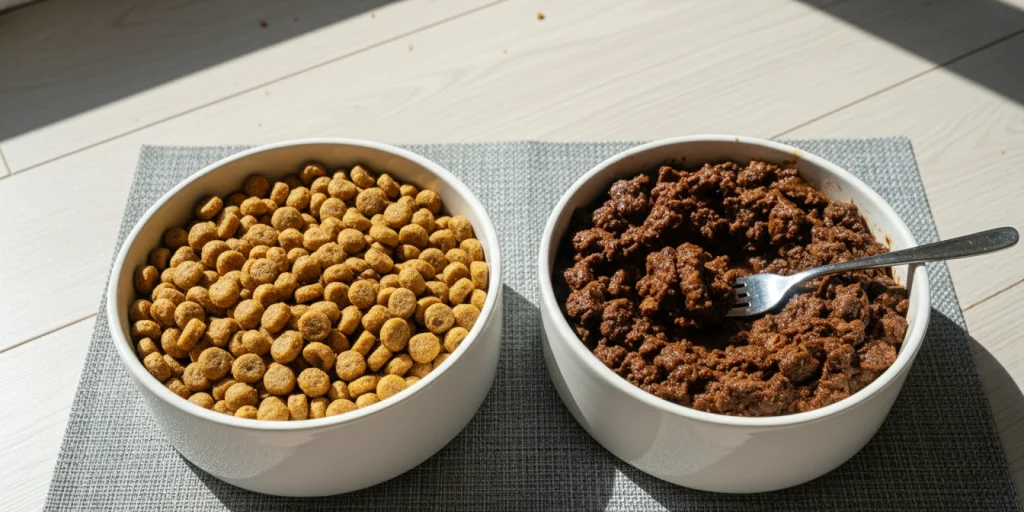
Dry Dog Food (Kibble)
Dry dog food, commonly known as kibble, is a popular feeding option for many dog owners. It is made by cooking and drying ingredients into small, crunchy pieces that are easy to store and serve. Because it has a lower moisture content, dry dog food typically lasts longer and is often more affordable than wet dog food.
Best For:
- Dogs that need structured feeding routines
- Owners looking for a budget-friendly option
- Dogs that benefit from chewing crunchy textures
- Pet owners who prefer easy storage and portion control
Pros:
- Long shelf life and easy storage
- Usually more affordable per serving
- Convenient for travel and daily feeding
- Crunchy texture may help reduce plaque buildup
Cons:
- Low moisture content may not support hydration
- Some dogs find it less appealing than wet food
- Lower-quality formulas may contain fillers
Wet Dog Food (Canned)
Wet dog food is a moisture-rich option that usually comes in cans, pouches, or trays. It contains significantly more water than dry kibble and often has a stronger aroma and softer texture. Many dogs prefer wet food because of its taste and ease of chewing.
Best For:
- Puppies and senior dogs
- Dogs with dental issues
- Picky eaters
- Dogs that need additional hydration
Pros:
- High moisture content supports hydration
- Strong flavor and aroma improve appetite
- A softer texture is easier to chew
- Often contains higher real meat content
Cons:
- Higher cost per serving than dry food
- Must be refrigerated after opening
- Shorter shelf life once opened
- Provides fewer dental benefits than kibble
What Is Wet Dog Food?
Wet dog food contains high moisture, usually between 70% and 80%. It comes in cans, pouches, or trays and has a soft texture. Most wet foods include real meat as the main ingredient, which makes them more flavorful.
Because of the high water content, wet dog food supports hydration and is easier to chew. It works well for puppies, senior dogs, and dogs with dental issues.
What Is Dry Dog Food?
Dry dog food, also known as kibble, contains about 10% moisture. It has a crunchy texture and a longer shelf life than canned food. Dry food is easy to store and measure.
Many dry formulas are nutrient-dense and cost-effective. The crunchy texture may also help reduce plaque buildup on teeth.

Comparing Ingredients in Dry vs Wet Dog Food
Ingredients make a big difference in dog food quality. Dry and wet dog foods vary in what they offer. Understanding these differences helps you pick the best food for your dog. This section breaks down key ingredient factors.
Protein Sources
Protein is vital for your dog’s muscles and health. Dry dog food often uses meat meals or plant proteins. Wet dog food usually has higher real meat content. Look for named meat like chicken or beef. Avoid foods with vague terms like “meat by-product.”
Additives And Preservatives
Additives keep food fresh and tasty. Dry food uses synthetic preservatives like BHA or BHT. Wet food often uses natural preservatives such as vitamin E. Some additives improve flavor but may cause allergies. Check ingredient lists for anything unfamiliar.
Nutrient Density
Wet dog food tends to have higher moisture content. This lowers nutrient density per serving. Dry dog food is more concentrated with nutrients. Dogs eating wet food may need larger portions. Always compare the guaranteed analysis on labels for nutrients.
Benefits of Dry Dog Food
Dry dog food offers many benefits for pet owners and dogs. It is a popular choice for feeding dogs every day. Many dogs enjoy the crunchy texture and flavor. Dry food can support a dog’s health and fit well with busy lifestyles.
Nutritional Value
Dry dog food contains balanced nutrients for dogs. It usually has proteins, fats, and vitamins that dogs need. Many brands add ingredients to support healthy skin and coat. Some formulas focus on specific needs like weight or digestion. This type of food helps maintain a dog’s energy and strength.
Convenience And Storage
Dry dog food is easy to store and serve. It stays fresh longer without refrigeration. Bags can be resealed to keep food safe. It is simple to measure portions for each meal. This type of food is also easy to carry on trips or walks.
Cost Effectiveness
Dry dog food often costs less than wet food. Large bags provide many meals at a lower price. This can save money for families with multiple dogs. Buying in bulk reduces frequent trips to the store. It is a budget-friendly option for daily feeding.

Benefits of Wet Dog Food
Wet dog food offers several benefits that can improve your pet’s daily diet. It contains high moisture content, which helps keep dogs hydrated. The texture and flavor often appeal more to picky eaters. Many wet foods also cater to specific health needs, making them a versatile choice for different dogs.
Hydration Support
Wet dog food has a high water content, usually 70% to 80%. This helps dogs stay hydrated, especially those that do not drink enough water. Proper hydration supports kidney function and overall health. It is useful for dogs living in hot climates or those with certain medical conditions.
Palatability And Taste
Wet food has a strong aroma and a softer texture. These qualities make it more appealing to dogs that refuse dry kibble. The variety of flavors and ingredients in wet food can satisfy even the pickiest eaters. It can also encourage older dogs with dental issues to eat comfortably.
Suitability For Health Issues
Wet dog food often targets specific health problems. Some formulas support weight management, urinary health, or digestive care. The extra moisture helps dogs with urinary tract issues. Wet food is easier to chew for dogs with dental problems or missing teeth.
Pros and Cons of Dry Dog Food
Dry dog food is widely used because of its convenience and affordability. However, it has both strengths and weaknesses.
Advantages of Dry Dog Food
Dry food is easy to store and does not require refrigeration. Large bags last longer and usually cost less per serving than wet food. It is simple to measure portions, which helps control weight.
The crunchy texture may support dental health by reducing plaque buildup. High-quality kibble also provides balanced nutrition for daily feeding.
Disadvantages of Dry Dog Food
Dry food contains low moisture, which means it does not contribute much to hydration. Some lower-quality brands include fillers or excessive carbohydrates.
Certain dogs may find kibble less appealing, especially picky eaters or older dogs with dental discomfort.
Advantages and Disadvantages of Wet Dog Food
Wet dog food offers a strong flavor and high moisture content. It can be beneficial for many dogs, but it also has practical limitations.
Advantages of Wet Dog Food
Wet food contains significantly more water, which helps support hydration. This can benefit dogs that do not drink enough water.
The soft texture makes it easier to chew and digest. Many dogs prefer the taste and aroma, which can encourage a better appetite.
Disadvantages of Wet Dog Food
Wet food usually costs more per serving than dry food. Once opened, it must be refrigerated and used quickly.
Because it is soft, it does not provide the same dental benefits as kibble. Some dogs may also require larger portions due to lower nutrient density per gram.
Choosing the Right Food Based on Your Dog’s Needs
Choosing the right dog food depends on your dog’s unique needs. Each dog has different requirements based on age, breed, health, and lifestyle. Understanding these factors helps pick between dry and wet food. The right choice supports your dog’s health and happiness every day.
Age And Breed Considerations
Young puppies need food rich in nutrients for growth. Wet food is often easier for small mouths to chew. Older dogs may prefer softer wet food to protect their teeth. Large breeds need food that supports strong bones and joints. Dry food can help keep their teeth clean. Small breeds may benefit from nutrient-dense dry kibble to maintain energy.
Allergies And Sensitivities
Some dogs have allergies or sensitive stomachs. Wet food usually has fewer fillers and artificial ingredients. This can reduce allergic reactions and improve digestion. Dry food formulas often include grains or additives that may cause issues. Choose food with limited ingredients for sensitive dogs. Always check the label for potential allergens.
Activity Level And Lifestyle
Active dogs need food with higher protein and calories. Dry food is convenient for busy owners and outdoor activities. Wet food provides extra hydration, good for less active dogs. Dogs with low activity may gain weight on high-calorie diets. Adjust food type and amount to match your dog’s daily energy use. Consistent feeding supports a healthy weight and lifestyle.

Key Considerations When Choosing Dry vs Wet Dog Food
When deciding between dry and wet dog food, several factors should guide your choice.
Nutrition Quality
Look for foods that meet recognized nutritional standards and provide balanced protein, fats, vitamins, and minerals.
Your Dog’s Age and Health
Puppies, senior dogs, and dogs with medical conditions may benefit from different food textures and nutrient profiles.
Budget and Convenience
Dry food is generally more affordable and easier to store, while wet food can be more expensive and requires refrigeration after opening.
Hydration Needs
Dogs that drink less water may benefit from the higher moisture content found in wet food.
Dry vs Wet Dog Food for Different Dog Breeds
Different dog breeds have different nutritional needs, which can influence whether dry or wet food works better. Size, metabolism, and jaw strength all affect feeding choices.
Small Breeds
Small dogs often prefer smaller kibble sizes or soft food textures. Wet food can be easier to chew, but nutrient-dense dry food is also effective for maintaining energy levels.
Large Breeds
Large dogs usually benefit from structured feeding routines. Dry food is often recommended because it supports portion control and can help maintain dental health.
Working or Active Breeds
Highly active dogs need diets rich in protein and calories. Both wet and dry foods can work, but many owners prefer dry food because it provides concentrated nutrients.
Dry vs Wet Puppy Food – Which Is Better?
Puppies have different nutritional needs than adult dogs. Choosing between dry vs wet puppy food depends on age, breed size, and feeding habits.
Dry or Wet Dog Food for Puppies?
Wet food is often easier for young puppies to chew, especially during the early weaning stage. It can help increase calorie intake for fast growth.
Dry puppy food supports dental development and builds chewing habits. Many owners start with wet food and gradually introduce kibble to create balance.

Mixing Wet and Dry Dog Food – Is It a Good Idea?
Many pet owners combine both types to get the benefits of each. Mixing wet and dry dog food can improve taste, texture, and hydration.
Is Mixing Wet and Dry Dog Food Good?
Yes, mixing can be a practical option. It increases flavor appeal while maintaining the convenience of dry food. It may also help picky eaters finish their meals.
However, total calorie intake must be monitored to avoid overfeeding.
Mixing Wet and Dry Dog Food Ratio
A common starting ratio is 75% dry and 25% wet. For dogs that prefer softer meals, a 50/50 split may work better.
Always calculate calories from both food types. Adjust portions based on your dog’s weight and activity level.
Dry Versus Wet Dog Food for Specific Health Needs
Some health conditions influence whether dry or wet food is the better choice.
For Weight Management
Wet food often contains fewer calories per gram due to higher moisture. This can help dogs feel full while consuming fewer calories.
Dry food allows precise portion control, which is helpful for structured feeding plans.
For Digestive or Pancreatic Issues
Dogs with digestive sensitivity may benefit from limited-ingredient formulas. In some cases, low-fat wet or dry food may be recommended.
Always consult a veterinarian before changing food for medical conditions.
For Kidney or Urinary Health
Wet food supports hydration, which may benefit dogs with urinary concerns. Increased moisture can help dilute urine and support kidney function.
Top Brands And Product Reviews
Choosing the right dog food brand is important for your pet’s health and happiness. Many brands offer both dry and wet options, each with unique benefits. Reading reviews helps you understand what works best for your dog.
This section covers top brands and products. You will find popular dry and wet dog foods. Customer ratings and feedback give real insights.
Best Dry Dog Foods
Dry dog food is convenient and lasts longer. Brands like Blue Buffalo, Hill’s Science Diet, and Wellness Core are popular. They offer balanced nutrition with quality ingredients.
Blue Buffalo uses natural ingredients and no artificial additives. Hill’s Science Diet focuses on science-backed formulas. Wellness Core is grain-free and high in protein.
Best Wet Dog Foods
Wet dog food is tasty and hydrating. Brands such as Merrick, Nutro, and Royal Canin lead the market. Their products have rich flavors that dogs enjoy.
Merrick uses real meat and vegetables. Nutro emphasizes non-GMO ingredients. Royal Canin creates breed-specific recipes for tailored nutrition.
Customer Ratings And Feedback
Many pet owners share their experiences online. Dry food reviews highlight ease of use and dental benefits. Wet food reviews praise palatability and moisture content.
Some customers report better digestion with certain brands. Others mention improved coat shine and energy levels. Feedback helps guide new buyers in choosing the right food.

Popular Dry Dog Food Example – Hill’s Science Diet
Hill’s Science Diet is widely recognized for producing dry dog food based on veterinary research. The brand focuses on life-stage nutrition, offering formulas for puppies, adults, and senior dogs. It also provides specialized options for weight management, sensitive stomachs, and joint support.
Most formulas include named animal protein sources and meet established nutritional standards for “complete and balanced” diets. The dry kibble format makes portion control simple and supports daily dental maintenance through chewing.
This type of brand example helps readers understand what a structured, science-backed dry food looks like in the market. It connects theory, nutrient balance, and formulation standards to a real-world product category.
Hill’s Science Diet – Pros and Cons
Hill’s Science Diet is often chosen for structured, research-based nutrition. Here is a balanced overview:
Pros
- Formulated using veterinary research
- Offers life-stage and condition-specific options
- Widely available in pet stores and clinics
- Meets recognized nutritional standards
- Consistent ingredient quality control
Cons
- Higher price compared to some generic brands
- Some formulas contain grains, which may not suit all dogs
- Limited “novel protein” options for severe allergies
This balanced view helps readers evaluate whether the brand aligns with their dog’s needs and budget.
Popular Wet Dog Food Example – Royal Canin
Royal Canin is known for its breed-specific and condition-focused wet dog food formulas. The brand designs recipes tailored to factors such as size, age, digestive sensitivity, and urinary health.
Its wet food options typically provide high moisture content and soft texture, which can support hydration and make meals more appealing for picky eaters or senior dogs. Many formulas are developed with precise nutrient profiles to match specific health goals.
Using a well-known wet food brand as an example helps readers see how moisture-rich diets are applied in practical feeding plans. It also demonstrates how wet food can be selected strategically based on a dog’s individual needs rather than taste alone.
Royal Canin – Pros and Cons
Royal Canin focuses on targeted nutrition and breed-specific formulas.
Pros
- Breed-specific and size-specific recipes
- Strong focus on digestive and urinary support formulas
- High palatability for picky eaters
- Precise nutrient balance per life stage
Cons
- Premium pricing
- Some formulas include by-product meals
- Ingredient lists may not appeal to owners seeking “minimal ingredient” diets
This structure keeps the section informative without sounding promotional.
Dry vs Wet Dog Food – Scientific Comparison
Looking at measurable differences makes the comparison clearer. Dry and wet foods vary in moisture, shelf life, calorie density, and dental impact. These factors influence hydration, cost, and feeding routine.
| Feature | Dry Food | Wet Food |
| Moisture | ~10% | 70–80% |
| Shelf Life | Long | Short after opening |
| Dental Support | Moderate | Minimal |
| Cost per Calorie | Lower | Higher |
Dry food is more calorie-dense and easier to store, while wet food supports hydration and often improves palatability. Choosing between them depends on your dog’s health needs and your feeding preferences.

Understanding AAFCO Standards in Dog Food
When comparing dry and wet dog food, it’s important to look beyond marketing claims. The Association of American Feed Control Officials (AAFCO) sets nutritional guidelines that pet food manufacturers follow.
A label that says “complete and balanced” means the formula meets AAFCO nutrient profiles for a specific life stage, such as growth, maintenance, or all life stages. You can usually find this statement in small print on the back or side of the package. Checking for this certification ensures the food provides essential nutrients your dog needs daily, regardless of whether it is dry or wet.
What Do Veterinarians Recommend?
Veterinarians generally focus on nutritional adequacy rather than format alone. Many recommend choosing a diet that meets AAFCO standards and matches the dog’s life stage, size, and health condition.
Mixed feeding is often suggested because it combines hydration benefits from wet food with the convenience and dental advantages of dry kibble. Monitoring body weight, stool quality, coat condition, and energy levels is more important than choosing one type exclusively. For dogs with medical conditions, a veterinarian’s guidance should always come first.
Dry vs Wet Dog Food Reddit Discussions – What Owners Say
Online discussions show mixed preferences. Some owners prefer dry food for convenience and cost. Others choose wet food for taste and hydration benefits.
Many experienced owners report success with mixing both types to balance nutrition and palatability.
Signs Your Dog’s Food Is Working
Choosing the right dog food should lead to noticeable improvements in your dog’s health and behavior. Several signs can indicate that the diet is supporting your dog properly.
Healthy dogs typically have a shiny coat, steady energy levels, and consistent digestion. Their stools should be firm, and their appetite should remain stable.
If your dog shows symptoms such as frequent digestive upset, dull fur, excessive weight gain, or low energy, the current diet may not be the best fit. Adjusting the type or quality of food can sometimes improve these issues.
How Much Should You Feed?
Feeding the right amount matters as much as choosing the right type. Portion size should be based on your dog’s weight, activity level, and calorie needs.
For example, a moderately active 20-kg dog may require around 900–1,100 calories per day, depending on metabolism. Dry food typically contains more calories per gram than wet food, so serving sizes differ significantly. Always calculate total daily calories if mixing both types. For dogs with obesity, diabetes, or other medical conditions, consult a veterinarian before adjusting portions.

How to Switch Between Dry and Wet Dog Food Safely
Changing your dog’s diet should be gradual to prevent digestive upset. A structured 7-day transition works well:
- Days 1–2: 75% old food, 25% new food
- Days 3–4: 50% old food, 50% new food
- Days 5–6: 25% old food, 75% new food
- Day 7: 100% new food
Monitor stool consistency, appetite, and energy during the transition. If vomiting, diarrhea, or refusal to eat occurs, slow the process and consult a veterinarian if symptoms persist.
Common Myths About Dry vs Wet Dog Food
Many dog owners encounter conflicting advice about feeding their pets. Understanding the facts helps prevent common mistakes.
Myth 1: Wet Food Is Always Healthier
Wet food contains more moisture, but both wet and dry dog foods can provide complete nutrition if they meet established nutritional standards.
Myth 2: Dry Food Always Cleans Teeth
While kibble can help reduce plaque buildup slightly, it does not replace proper dental care, such as brushing or dental chews.
Myth 3: Dogs Should Eat Only One Type of Food
Many veterinarians support mixed feeding because it combines the benefits of both dry and wet food.
Frequently Asked Questions
What Are The Main Differences Between Dry And Wet Dog Food?
Dry food is crunchy and lasts longer. Wet food is softer and has more moisture.
Which Dog Food Is Better For Dental Health?
Dry food helps clean teeth by reducing plaque. Wet food does not aid dental care.
Can Wet Dog Food Help Dogs Drink Less Water?
Wet food has high water content, so dogs may drink less when eating it.
Is Dry Or Wet Dog Food Easier To Store?
Dry food stores longer and is easier to keep fresh than wet food.

Conclusion
Choosing between dry and wet dog food ultimately depends on your dog’s individual needs, health condition, and feeding routine. Dry food offers convenience, longer storage life, and potential dental benefits, while wet food provides higher moisture and a stronger flavor that many dogs prefer.
For many pet owners, the best solution is not choosing one over the other but combining both. Mixed feeding can balance hydration, nutrition, taste, and convenience while giving your dog more variety at mealtime.
The most important factor is ensuring the food meets complete and balanced nutritional standards and matches your dog’s age, activity level, and medical needs. By focusing on quality ingredients and proper portion control, you can build a diet that supports your dog’s long-term health, energy, and happiness.
A well-fed dog is not just healthier—it’s happier, more active, and ready to enjoy life with you every day.
Author Bio
Israt Jahan is a pet care content writer who focuses on dog nutrition, feeding strategies, and responsible pet ownership. She researches veterinary guidelines, ingredient quality, and feeding practices to create practical guides that help dog owners make informed decisions. Her goal is to simplify complex topics in pet nutrition so readers can confidently choose the best food for their dogs.